- Sunda
- Plan a Trip to Bandung
- Where is Bandung?
Where is Bandung?
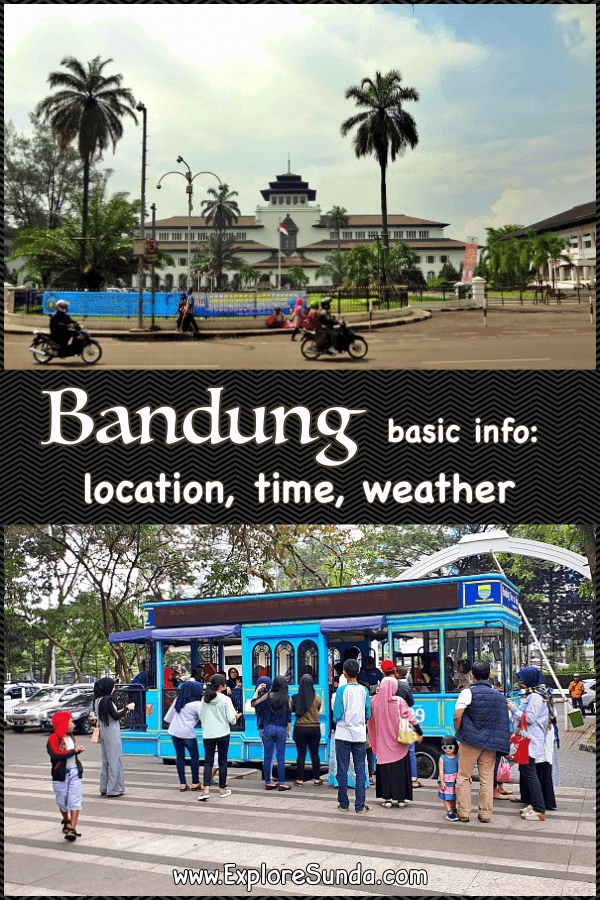
So, you've heard about the colorful and bustling city of Bandung. You've read about the many wonderful places your family can enjoy, and now you want to visit. But where is Bandung? Then there’s the fun part of getting ready: finding out what time it is, what the weather will be like, and what to pack for warm days and cool evenings.
Those might be some of the first questions that pop up when you're planning your vacation, and we're here to help you :)
1. Where is Bandung?
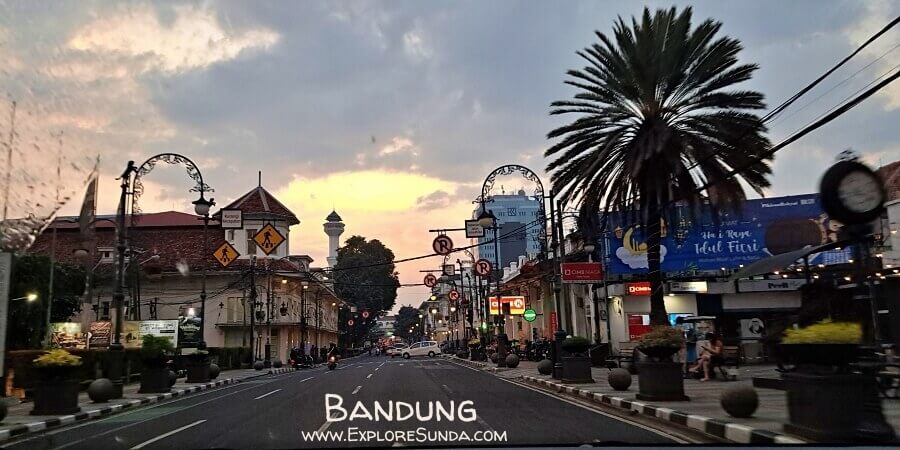 Sunset at Asia Afrika street in downtown Bandung.
Bandung is the capital of West Java Province, one of Indonesia’s 34 provinces. It lies in the western part of Java Island, the most populous island in Indonesia.
The coordinates of downtown Bandung are 6°55'17.4"S 107°36’35.7"E (-6.921487, 107.609913). It lies slightly below the equator, making it a tropical city with lots of sunshine throughout the year and rain during the rainy season.
It is approximately 130 kilometers from Jakarta, the capital city of Indonesia, so Bandung is easy to reach. You can choose between taking a train, the Whoosh high-speed train, a bus, a shuttle bus (popularly called ‘travel’), or driving a car. Bandung is well connected by toll roads to Jakarta, Cirebon, Padalarang, Sumedang, Soreang, and other destinations.
There are also many train routes from Bandung to other cities in Java, such as Yogyakarta, Semarang and Surabaya, as well as many smaller towns in between.
Bandung has an international airport, Husein Sastranegara Airport. In 2026, this airport has just been reactivated, making it easier to fly to Bandung. The other international airport in West Java Province is Kertajati International Airport, approximately 100 kilometers northeast of Bandung.
Are you planning a trip to Bandung? Check these out:


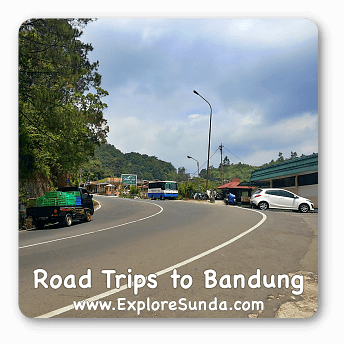
What Time is it in Bandung?
Indonesia has three time zones, and Bandung is in Indonesia's western time zone, known as WIB (Waktu Indonesia Barat). Like Jakarta and other areas in western Indonesia, Bandung is seven hours ahead of Greenwich Mean Time (GMT+7).
Lying pretty close to the equator, the sun rises and sets around 6 AM and 6 PM, respectively. These times vary by less than 30 minutes when the sun is at its furthest north or south.
How Is the Weather in Bandung?
The city is located in a highland surrounded by mountains, hence it is known as the Bandung Basin. It is approximately 768 meters above sea level.
Being near the equator, we only experience two seasons: dry and rainy seasons. It used to be predictable: the rainy season ran from September to February, and the dry season ran from March to August. But global warming has changed the pattern. Luckily, it is still only a matter of being dry or wet.
Surprisingly, Bandung reaches its lowest temperatures (around 16–18°C) at night during the dry season, around July. This is when cold winds from Australia blow toward Asia and pass through Java. We call this phenomenon bediding. In some higher highlands, such as Ciwidey in Bandung, Dieng in Central Java, and Bromo in East Java, the drop in temperature creates frost. The locals call this frost Embun Upas (toxic dew) because it damages their crops. On the other hand, many tourists come to see this annual phenomenon.
Being in the tropics also means that humidity in Bandung is quite high. Sometimes it almost reaches 100%. Meanwhile, temperatures range from 28 to 35 degrees Celsius during the day and then drop to the low twenties from midnight to dawn. However, since Bandung is in the highlands, there are plenty of cold winds blowing, especially at night, so the weather in Bandung is more bearable than in lowlands such as Jakarta, Tangerang, Tangerang Selatan, and Cirebon. You might notice that many restaurants and cafés in Bandung don’t use air conditioning. They let the cool breeze in by opening their windows and doors.
Recently, the heavy rainfall during the rainy season has brought several landslides and floods. One example near Bandung is landslides that have occurred several times on the roadside cliff near Curug Cimahi (Rainbow Waterfall).
So, if you ask when the best time to visit Bandung is, it depends on what you want to do here. You only need a backup plan if the weather is too extreme. The UV index during the dry season is very high, so you might want to cool down by going to shopping malls (where the air conditioning is always on) or going for indoor activities when it rains. Having said that, what would you pack for your trip to Bandung?
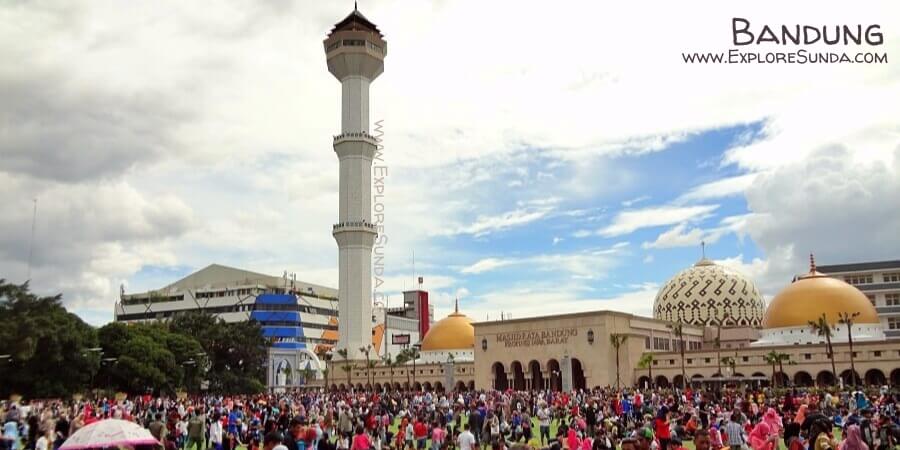 People gathering on the lawn of Great Mosque in Alun-Alun Bandung.
What to wear in Bandung?
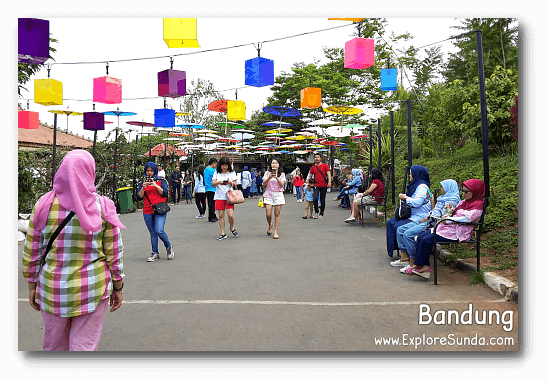 Wear some casual and comfortable clothes while you explore Bandung.
In other words, what would be an appropriate outfit for traveling in Bandung? Depending on how fashionable you are, the answer can be simple, or it can open up a whole range of possibilities.
In short, the weather in this city is warm and humid all year round. People therefore prefer to wear light, absorbent clothes such as cotton. As long as you’re not visiting places of worship, you can wear shorts, T-shirts, and sandals. Sleeveless tops are still okay, but tank tops are not common. Since the majority of people in Bandung are Muslim, you will see many women wearing hijabs.
Because Bandung is in the highlands, you might encounter strong, cold winds, especially at night and in the early morning (particularly when you join an off-road tour to see the sunrise). So, you’d better bring a jacket.
Several restaurants in Upper Dago and Punclut offer romantic dinners and views of Bandung at night. Some are indoors, but many are outdoors, so you might need a jacket.
Overall, people in Bandung are quite casual. You will see many people wearing jeans and T-shirts. Formal clothes are reserved for weddings. If you want to blend in with the locals, wear batik. The beauty of wearing batik is that it can be considered both casual and formal :)
Now you know where Bandung is, as well as what the weather is like in Bandung. The next step in preparing for your vacation in Bandung would be to check out the many places of interest in this city!
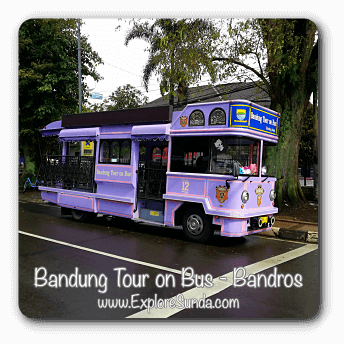
You might like these too ...
Bandung Factory Outlet | Great Shopping Experience For Everyone
Visiting Bandung will never be the same without shopping in the famous Bandung Factory Outlet! Get to know the best shops here...
Ciwidey, Bandung: A Family Vacation to Kawah Putih and Situ Patenggang
Full pack information on things to do in Ciwidey, Bandung: explore Kawah Putih, Situ Patenggang, Ranca Upas, Rancabali tea plantation, and where to go glamping!
Pasar Baru Bandung: No. 1 Textile Centre In The Heart Of Bandung
Add flavor to your Bandung shopping experience by visiting Pasar Baru Bandung. Let's have a shopping spree!
Bandung | Top 12 Things to Do
The list of top 12 activities people love to do in Bandung: shopping, culinary adventure, visit museums, horse riding, play in the parks and more. What's yours?
Bandung Shopping Guide: The List of Top 11 Shopping Malls in Bandung
Here is the list of the best Bandung shopping malls! Find out things to do, cuisines to dine, and items to buy in each mall.
Bandung Shopping Guide | Top 3 Souvenir Shops in Bandung
Bandung shopping guide provides you with an important list of what are the unique Sundanese souvenirs and where to get them!
Bandung Shopping Guide: Hunting Delicious Snacks in Bandung
Bandung shopping guide will help you find delicious snacks in Bandung: what are they and where are the snack shops!




Recent Articles


-
Sundanese Food: Dishes to Try at a Sundanese Restaurant
Oct 03, 26 05:05 AM
 Discover Sundanese food, from nasi timbel and nasi liwet to karedok, gepuk, sambal, and traditional drinks, and explore some of its most popular dishes.
 -
The Site Map of ExploreSunda.com
Sep 29, 26 01:03 AM
 A thorough site map to help you browse through the Explore Sunda site.
 -
Kawasan Wisata Punclut Bandung: Cafes & Views in Sarae Hills
Sep 28, 26 09:07 AM
 Discover Punclut Bandung at Sarae Hills—cool breezes, sunset views, and cliffside cafes with photo spots, playgrounds, and diverse dining options.