- Sunda
- Plan a Trip to Bandung
- Things to Do in Bandung
- Dutch and Japanese Caves in Tahura Djuanda
Dutch and Japanese Caves in Tahura Djuanda
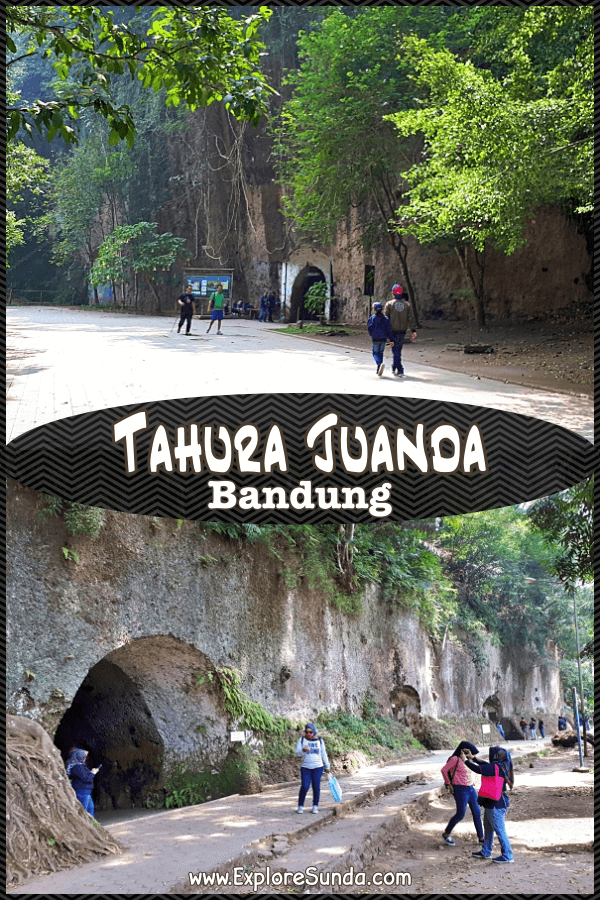
Visiting the Dutch and Japanese Caves in Tahura Djuanda feels like stepping from a quiet forest trail into a hidden piece of World War II history. Behind their dark tunnels are remnants of a military past that later took on entirely different roles before becoming one of Bandung's most fascinating attractions. This guide explains their history, how to reach them, and what you can expect before exploring both caves yourself.
Dutch Cave (Goa Belanda) and Japanese Caves (Goa Jepang) served as bunkers during World War II because of their strategic location. Hidden within the forest and high in the mountains, they allowed troops to monitor the surrounding area while remaining concealed from enemy forces.
After World War II, until the 1970s, the Indonesian military used the Dutch Cave as an ammunition warehouse. Today, both caves are part of Juanda Forest Park and are open to the public. Visitors are free to explore them.
How to Get to Goa Belanda (Dutch Cave) and Goa Jepang (Japanese Cave)
Of the five entrances to Juanda Forest Park, Gates 1 and 2 are the closest to the Dutch and Japanese Caves. Both are accessible via Ir. H. Juanda Street (formerly Dago Street).
Need information about transportation, entrance fees, and routes? See the complete Tahura Djuanda guide here…
Check the back of your ticket, where you'll find a map of Tahura Djuanda showing the location and distance of each attraction. According to the map, the Japanese Cave is only 500 meters from Gate 1, while the Dutch Cave is another 700 meters beyond the Japanese Cave.
 Take a look at the back of your ticket and you’ll find a handy map of Tahura Juanda, complete with distances between places.
Although it is a forest park, the main route to the Dutch Cave is either an asphalt road or a paved pathway. As a result, the route is accessible for wheelchairs and strollers. In my experience, it's easier to follow the asphalt road to the Dutch Cave than to rely on the directional signs.
For example, we set out for the Japanese Cave and followed a sign pointing left, only to end up in the outbound activity area. In the end, we reached the Dutch Cave first and visited the Japanese Cave on the way back.
Although the trail to the Japanese Cave is paved, visitors must descend several steps, making it inaccessible to wheelchairs and strollers.
Tips:
Being in the forest, bugs are inevitable. Don't forget to wear a mosquito repellent patch or apply mosquito repellent, especially if you're prone to insect bites.
Dutch Cave (Goa Belanda) in Tahura Djuanda
 The entrance to Goa Belanda (Dutch Cave) in Tahura Djuanda, Bandung.
Goa Belanda (Dutch Cave) is the iconic landmark of Tahura Djuanda. Its history began in 1906, when the Dutch dug a tunnel through a tuffaceous sandstone hill to build a hydroelectric power plant. However, the project was unsuccessful. Twelve years later, the Dutch colonial government expanded the tunnel by adding several rooms on both sides of the main passage and rerouted the water through underground channels, which resurfaced near today's Gate 2.
At the beginning of World War II, Bandung became the headquarters of the Dutch East Indies Army. As a result, it also served as the headquarters of the Allied military command, comprising forces from the United States, the United Kingdom, the Netherlands, Australia, and New Zealand. During this period, the Dutch further expanded the cave, converted it into a military bunker with several prison cells, and established a radio telecommunication station to replace the one on Mount Puntang.
After Indonesia's independence, the Indonesian government continued using Goa Belanda as an ammunition warehouse until the 1970s, which explains the large logistics entrance on one side of the cave.
Today, Goa Belanda is open to the public as one of Tahura Djuanda's main attractions. Visitors are free to explore the cave. The cave is enormous. Although the ventilation system remains intact, there is no lighting inside, making it pitch black. Don't worry, though. As you approach the entrance, someone will likely offer to rent you a flashlight. Accepting it means you've agreed to rent it. The rental fee is Rp. 5,000 per flashlight. Guided tours of the cave are also available for Rp. 30,000. If you need an English-speaking guide, it's best to ask before joining the tour.
After emerging on the other side of the hill, you can either turn back toward Dago, Bandung, or continue walking to Tebing Keraton (near Gate 5) or Maribaya, Lembang (Gate 4).
Since we had parked at the Gate 1 parking lot, we turned around and walked back to the plaza. There, we spotted a sign pointing to the Japanese Cave at a fork in the path. It pointed us downhill. Fortunately, the path was paved, so we felt confident we wouldn't get lost in the forest.
Japanese Cave (Goa Jepang) in Tahura Djuanda, Dago Bandung
 Goa Jepang (Japanese Cave) has several entrances, all connected by passages inside the cave.
From a military perspective, Tahura Djuanda had several strategic advantages. Its hidden location provided protection from enemy forces while remaining close to Bandung. After defeating the Dutch during World War II, the Japanese dug a cave here and established a military base. The cave served as a military bunker, an ammunition warehouse, a logistics depot, and a radio communication center. The cave became known as Goa Jepang (Japanese Cave) to distinguish it from nearby Goa Belanda.
Unlike the large, open Goa Belanda, Goa Jepang is smaller and tucked away among towering trees. Even the path leading to it is easy to miss.
Following the paved path downhill, we finally found a cave hidden beneath the giant roots of a tree, then another, and another. It turned out that Goa Jepang has several entrances. According to the map at the main entrance, the cave has four entrance tunnels and two smaller ventilation tunnels, all connected by passages inside.
Like Goa Belanda, flashlight rentals and guided tours are also available here. The prices are the same: Rp. 5,000 per flashlight and Rp. 30,000 for a guided tour. If you need an English-speaking guide, it's best to ask before joining the tour.
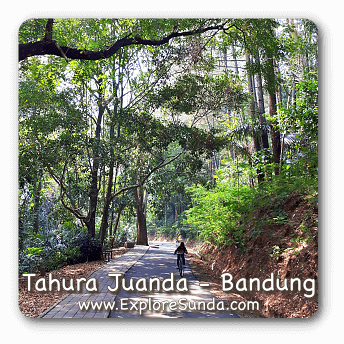
The Dutch Cave and Japanese Cave may be the highlights of Tahura Djuanda, but they're far from the only attractions in the park. Visitors also come here to picnic around the plaza, try the outbound activities, go camping, visit the museum, or let the kids play at the playground. Most of these facilities are located near Gates 1 and 2 in Dago, Bandung.
For many visitors, however, the best way to experience Tahura Djuanda is by hiking. The most popular route starts from Gate 1 or Gate 2, passes the Dutch Cave, and continues to Gate 4 in Maribaya, Lembang.
Continue reading: Fun Activities in Tahura Djuanda…
- Sunda
- Parks & Gardens
- Dutch and Japanese Caves in Tahura Djuanda
You might like these too ...
Bandung Factory Outlet | Great Shopping Experience For Everyone
Visiting Bandung will never be the same without shopping in the famous Bandung Factory Outlet! Get to know the best shops here...
Ciwidey, Bandung: A Family Vacation to Kawah Putih and Situ Patenggang
Full pack information on things to do in Ciwidey, Bandung: explore Kawah Putih, Situ Patenggang, Ranca Upas, Rancabali tea plantation, and where to go glamping!
Pasar Baru Bandung: No. 1 Textile Centre In The Heart Of Bandung
Add flavor to your Bandung shopping experience by visiting Pasar Baru Bandung. Let's have a shopping spree!
Bandung | Top 12 Things to Do
The list of top 12 activities people love to do in Bandung: shopping, culinary adventure, visit museums, horse riding, play in the parks and more. What's yours?
Bandung Shopping Guide: The List of Top 11 Shopping Malls in Bandung
Here is the list of the best Bandung shopping malls! Find out things to do, cuisines to dine, and items to buy in each mall.
Bandung Shopping Guide | Top 3 Souvenir Shops in Bandung
Bandung shopping guide provides you with an important list of what are the unique Sundanese souvenirs and where to get them!
Bandung Shopping Guide: Hunting Delicious Snacks in Bandung
Bandung shopping guide will help you find delicious snacks in Bandung: what are they and where are the snack shops!



Recent Articles


-
Where Is Bandung? Location, Time & Weather
Aug 17, 26 01:26 AM
 Planning to go to Bandung? Find out where is Bandung, what time it is, how the weather changes, and what to wear from day to night before you go.
 -
About ExploreSunda | Sunda Travel Guide
Aug 12, 26 10:37 PM
 Discover Sunda in western Java with clear, practical travel guides. Learn why ExploreSunda was created to help independent travelers navigate the region.
 -
Trip to Bandung Indonesia: Plan It Your Way
Aug 11, 26 05:53 AM
Planning a trip to Bandung Indonesia? Find practical advice on transport, getting around, where to stay, things to do, and local food to help you plan your trip.


%20and%20Goa%20Jepang%20(Japanese%20Cave)%2C%20two%20World%20War%20II%20bunkers%20in%20Taman%20Hutan%20Raya%20Ir.%20H.%20Djuanda%20(Tahura%20Djuanda)%2C%20Dago%20Pakar%2C%20Bandung.%20Discover%20their%20history%2C%20learn%20how%20to%20get%20there%2C%20and%20find%20out%20what%20to%20expect%20inside.%7C%20%23ExploreSunda%20%23DagoPakar%20%23TahuraDjuanda%20%23TamanHutanRayaIrHDjuanda%20%23Bandung%20%23GoaBelanda%20%23GoaJepang)