- Sunda
- Plan a Trip to Bandung
- Restaurants in Bandung
- Gado Gado, Karedok, Lotek
Gado Gado, Karedok & Lotek: What to Know
Karedok, Lotek, Gado Gado, Lalapan (Lalab), Pecel, and Urap are popular vegetable dishes you are likely to encounter when traveling in the Sunda region of Indonesia. They may look similar, but each has its own combination of vegetables, preparation, and sauce. The biggest differences are whether the vegetables are raw or cooked, what goes into the sauce, and how each dish is typically served. Knowing these differences will help you decide what to order when exploring Sundanese food.
Like Western salads, these dishes combine assorted vegetables. The main differences are in how the vegetables are prepared and dressed. Some use peanut sauce, while others use grated coconut or other seasonings. Some of these salads use raw vegetables, while others use cooked vegetables.
The best-known is Gado Gado, which comes from Betawi (Betawi is the ethnic group in Jakarta), but many Sundanese restaurants serve Gado Gado along with Sundanese salads such as Lalapan and Karedok. Bandung has a specialty called Lotek. Pecel from East Java and Urap from Central Java are also popular salads in Sunda. Although they look similar, each dish tastes different. So, what makes the difference? Below are short descriptions of each of the salads, including what makes each one unique:
Lalab / Lalapan
Lalab or Lalapan is the simplest form of Sundanese salad. It is a basket of assorted raw vegetables served with sambal terasi (spicy shrimp chili paste). Traditional lalapan always has tespong (fireweed), round green eggplants, and leunca (black nightshade), along with other vegetables such as cucumber, lemon basil, tomatoes, lettuce, and a piece of cabbage. The best way to enjoy Lalapan is with a bowl of sambal terasi (spicy shrimp chili paste).
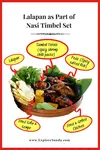
Lalapan is often part of a Nasi Timbel set with rice wrapped in banana leaves, fried or grilled chicken or fish, beef gepuk, fried tofu and tempe, and sambal.

Karedok
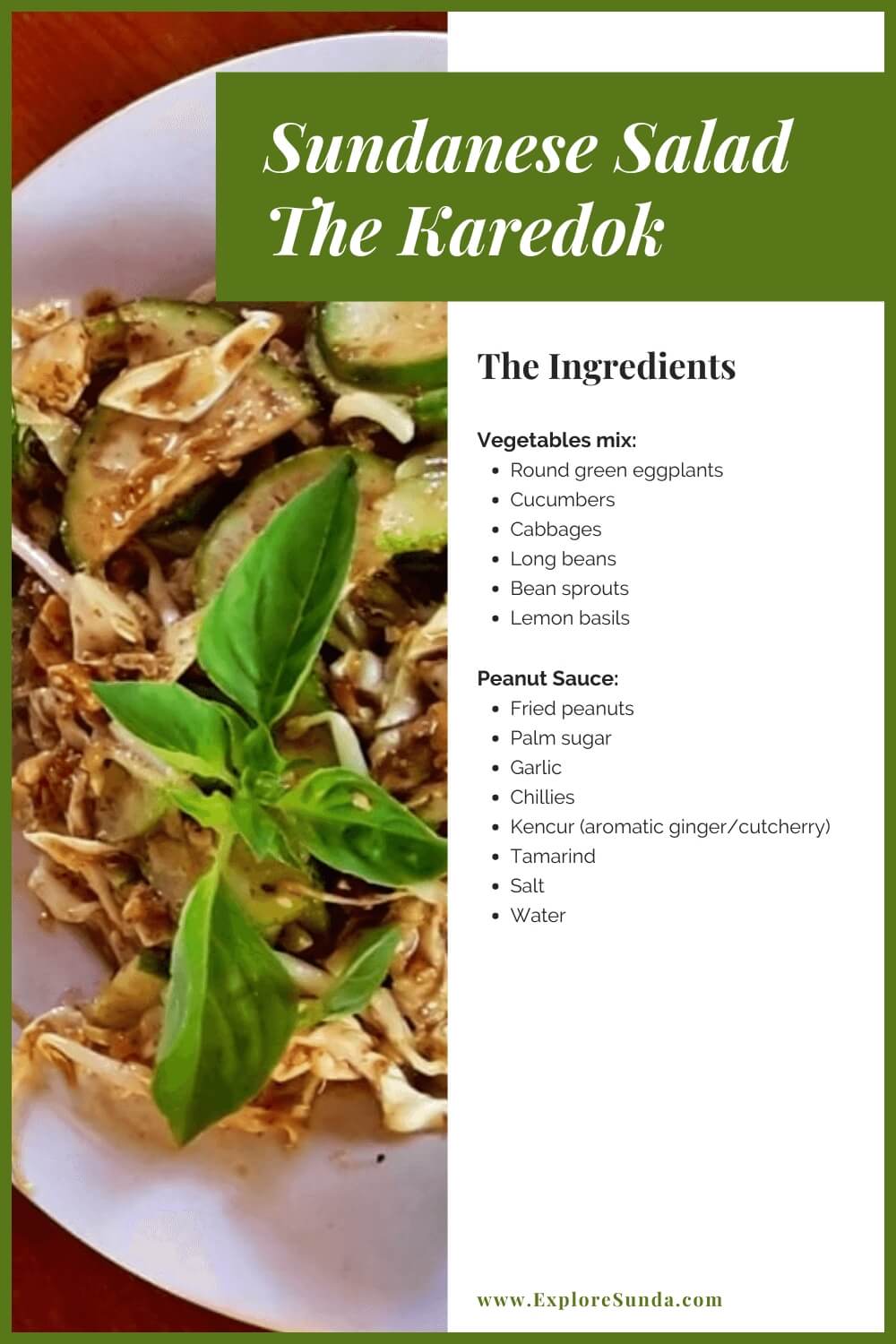
You can easily order Karedok in any Sundanese restaurant you visit, as it is the most well-known Sundanese salad. Karedok consists of assorted fresh raw vegetables mixed with peanut sauce. Karedok usually includes pieces of round green eggplants, cucumber, cabbage, long beans, bean sprouts, and lemon basil. Some restaurants also add leunca (black nightshade) to the mix. The taste of Kencur (a.k.a. Kaempferia galanga, aromatic ginger, cutcherry) gives Karedok its unique flavor.
Lotek
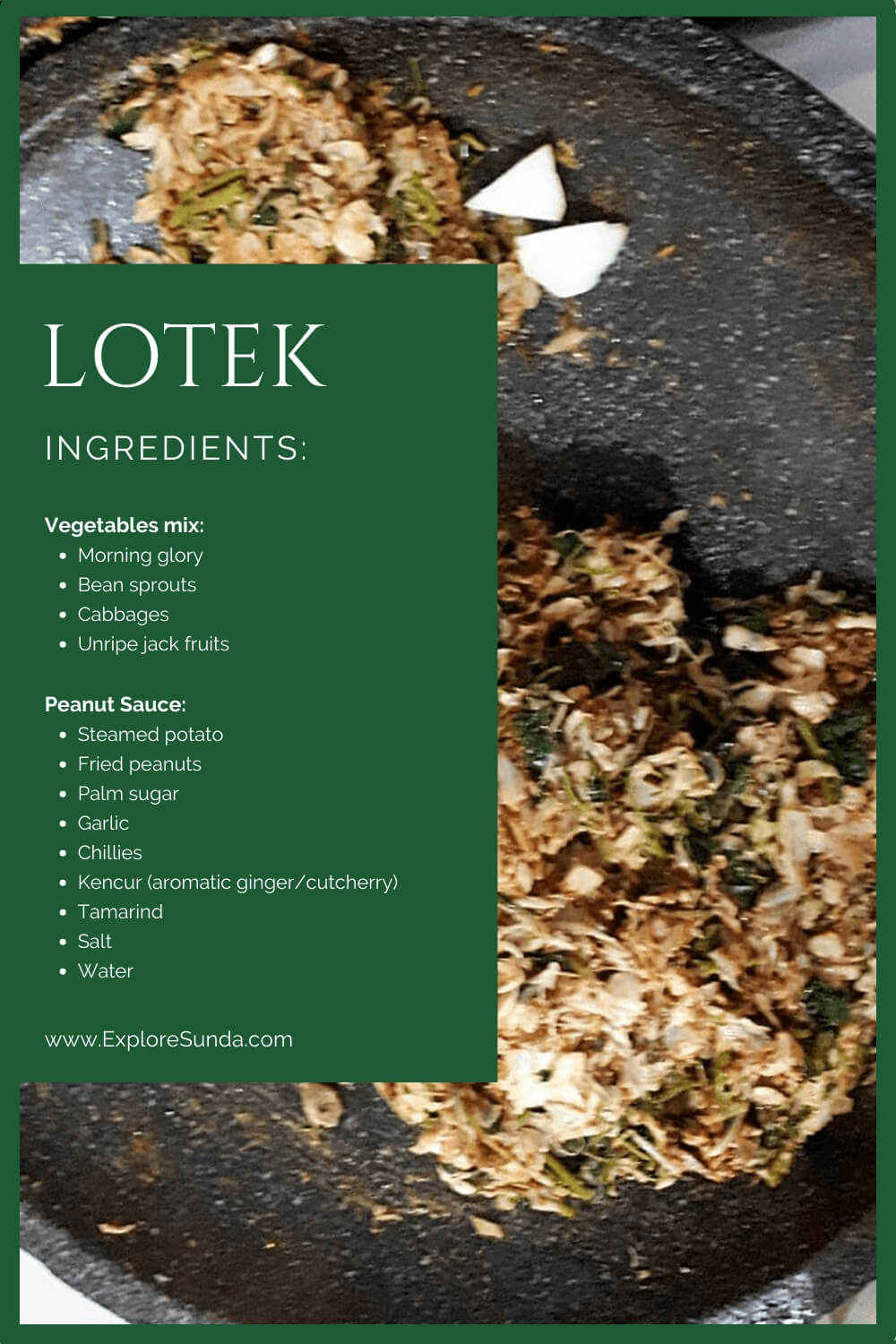
If Karedok is the raw version, Lotek is its cooked counterpart. What sets lotek apart is the mashed potato added to its peanut sauce. The potato gives the sauce a smooth, slightly creamy texture.
There are many lotek sellers in Bandung, but Lotek Kalipah Apo has been a popular choice since 1953. It is located at Jalan Kalipah Apo No. 42, Bandung. Its lotek comes with boiled water spinach, bean sprouts, cabbage, and young jackfruit, all tossed with the peanut sauce. First, they make the peanut sauce in a large stone bowl, then add the boiled vegetables and mix everything thoroughly.
Gado Gado
Another well-known salad in Sunda is Gado Gado, although it originated in Betawi (Jakarta). Gado Gado combines cooked and raw ingredients. The vegetables include long beans, bean sprouts, cabbage, carrots, and fresh lettuce. We then add slices of boiled egg, potatoes, and fried tofu before pouring the peanut sauce over them. The original Gado Gado Betawi is also said to include boiled corn kernels.
What differentiates Gado Gado from other Sundanese salads is its sauce. The peanut sauce is simmered with coconut water, giving it a savory and distinctive flavor.
Pecel
When it comes to Pecel, Madiun in East Java is the place that often comes to mind, as this flavorful vegetable dish originated there.
At its heart, Pecel is a simple yet flavorful mix of vegetables made with boiled water spinach, cabbage, and bean sprouts. Some sellers use boiled spinach instead of water spinach. The vegetables are then topped with peanut sauce. Pecel is usually served with Rempeyek Kacang (crackers topped with fried peanuts).
Because Pecel is very popular in Indonesia, you can easily find packaged Pecel sauce in supermarkets. To prepare it, simply mix the packaged sauce with water until it reaches a consistency you like.
Urap
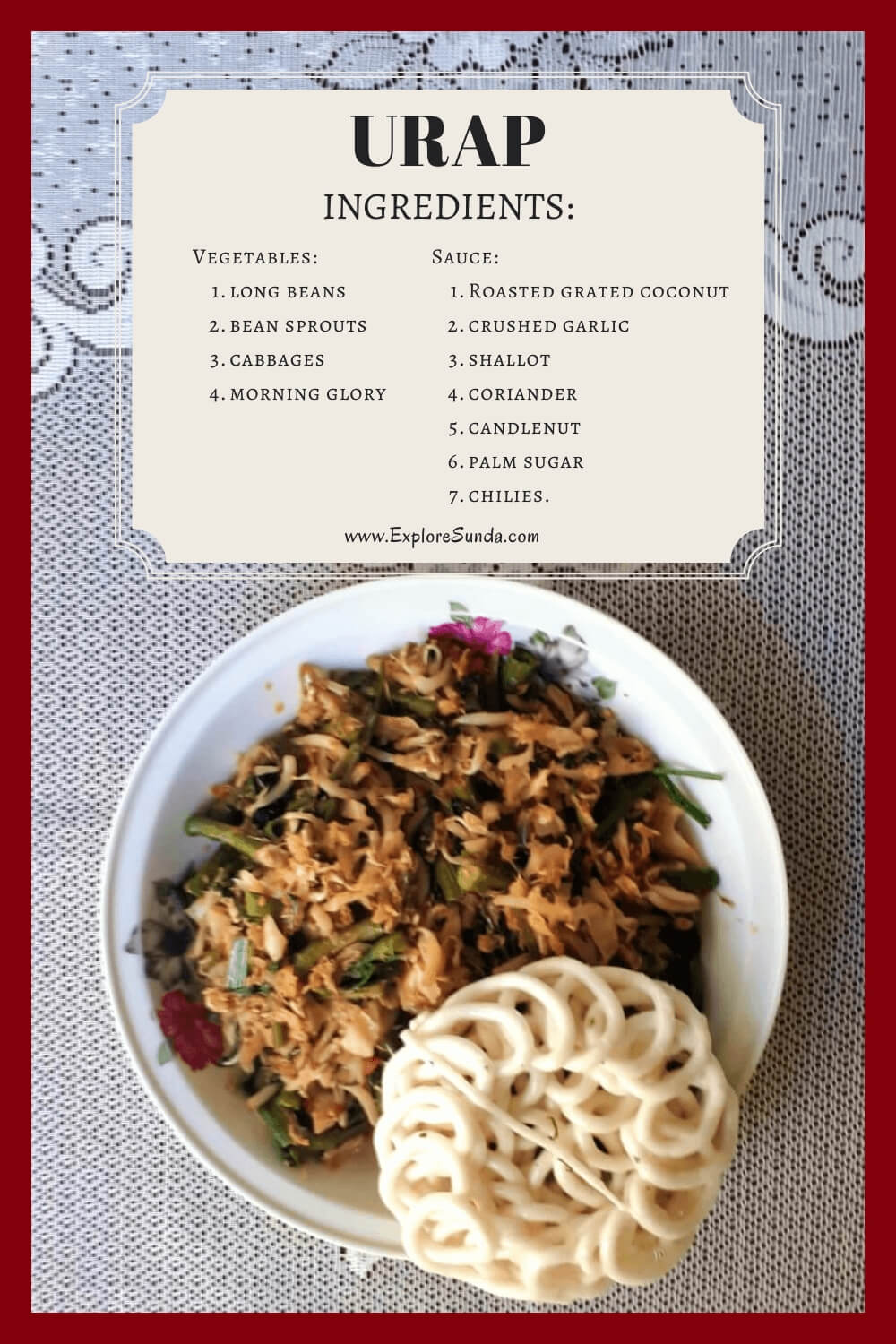
Urap is a traditional vegetable dish commonly enjoyed as a home-cooked meal in many areas of Central Java. It is made by mixing boiled vegetables such as long beans, bean sprouts, cabbage, and water spinach with a flavorful coconut-based sauce.
What makes Urap different from other salads is its sauce. Unlike many other salads, Urap does not use peanut sauce. The main ingredient in the sauce is roasted grated coconut, combined with a mixture of ground spices, including garlic, shallot, coriander, candlenut, palm sugar, and chilies.
How Do You Eat Sundanese Salads?
Indonesians love spicy food, so make sure to ask how spicy the sauce is. You can often choose how spicy you want the sauce to be, unless it comes pre-packaged.
Unlike Western salads, Gado Gado, Lotek, Karedok, Pecel, and Urap are often served with rice or lontong (rice cakes wrapped in banana leaves), along with crackers (kerupuk in Bahasa Indonesia). Tapioca crackers (Kerupuk Aci) are commonly served with Karedok, Gado Gado, Urap, and some varieties of Lotek. An exception is Lotek Kalipah Apo, which serves its Lotek with shrimp crackers (Kerupuk Udang) instead. For pecel, the go-to cracker is Rempeyek Kacang (crackers topped with fried peanuts).
Gado Gado, Karedok, and Lotek are just a few of the vegetable dishes you can find in Bandung. Wondering what else to try in Bandung? Here’s a list of the city’s famous foods…
You might like these too ...
The Fastest Drive from Jakarta to Bandung via Cikampek and Purbaleunyi
The drive from Jakarta to Bandung via Cikampek and Purbaleunyi toll roads is easy, fast, and can be fun too! Find out what to expect in your journey here.
Restaurants in Bandung: Where to Eat & What to Try
Planning where to eat? This guide to restaurants in Bandung shares local favorites, Sundanese food, historic spots, steaks, snacks, and more.
Trip to Bandung Indonesia: Plan It Your Way
Planning a trip to Bandung Indonesia? Find practical advice on transport, getting around, where to stay, things to do, and local food to help you plan your trip.
Flights to Bandung | 3 International Airports Near Bandung
Are you planning to go to Bandung by plane? Find out the flights to Bandung, where are the airports, and how to go to and fro the airports here ...
Trip to Bandung Indonesia by Train | 8 Reasons Why You Should Try It
Are you considering to catch a train for your trip to Bandung Indonesia? Here are eight reasons why a train trip to Bandung is the best!
Road Trip to Bandung Indonesia in Comfort | The Bus or Shuttle Bus?
Are you planning a road trip to Bandung Indonesia? Continue reading here to know your best options: take a bus, a shuttle bus, or rent a car.
Road Trip to Bandung Indonesia | The Best Five
Are you planning a road trip to Bandung Indonesia? Continue reading here to know the top five road trips to Bandung and what's to see and do along the way :)




Recent Articles


-
Tizi: What to Eat & How to Find It in Bandung
Oct 12, 26 10:27 AM
 Discover Tizi Cake Shop and Restaurant in Bandung, a local favorite for decades. Find its German specialties, tempting cakes, and easy directions.
-
Where Is Bandung? Location, Time & Weather
Oct 10, 26 01:18 AM
 Planning to go to Bandung? Find out where is Bandung, what time it is, how the weather changes, and what to wear from day to night before you go.
-
Gado Gado, Karedok, Lotek: What’s the Difference?
Oct 09, 26 06:27 AM
Trying Gado Gado in Sunda? Learn how it differs from Karedok, Lotek, Pecel, and Urap, plus how these vegetable dishes are served and enjoyed.